
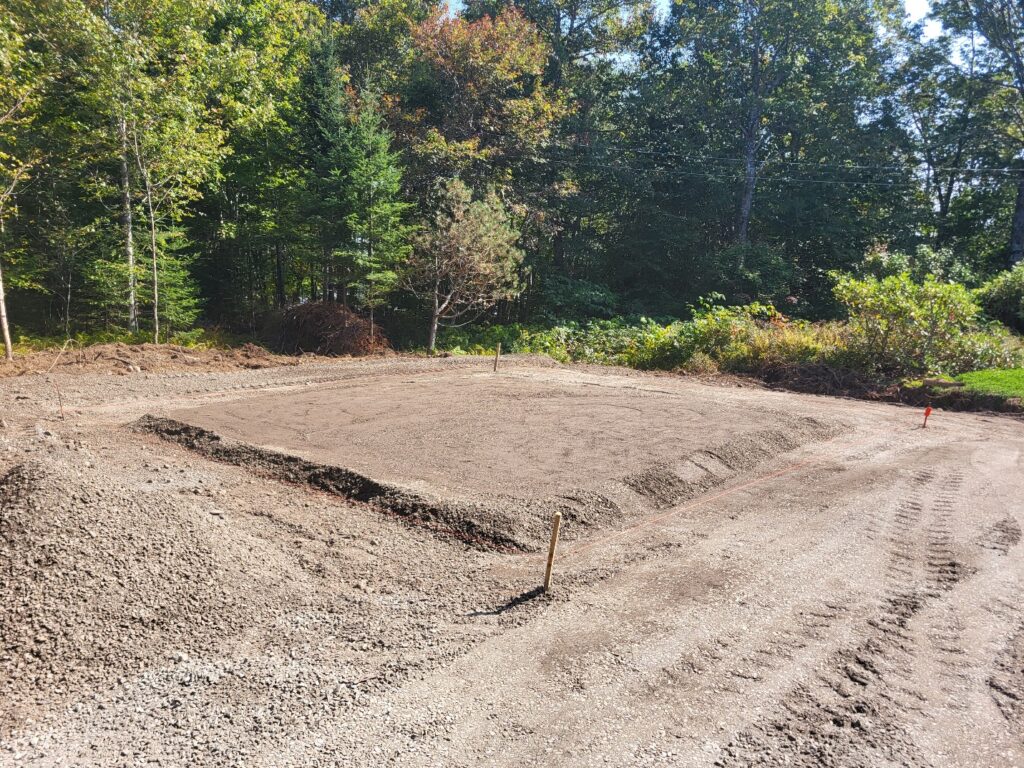
When you’re investing in a new garage or shop, the concrete you see on the surface is only part of the story. What really determines how well that slab performs over the years is what’s underneath it. In Nova Scotia’s freeze–thaw climate, proper excavation, base preparation, drainage, and frost protection are critical to prevent settlement, cracking, and long-term movement.
At FTF Excavation, we specialize in engineered garage pad preparation for homeowners and rural property owners throughout the Halifax area and beyond. Here’s how we approach building a garage pad that’s designed to stay level and perform for decades.
1. Site Evaluation: Understanding the Ground You’re Building On
Every successful project starts with understanding the site. Before a machine ever touches the ground, we evaluate:
- Soil type and bearing capacity
- Existing slope and grading
- Drainage patterns and water flow
- Access for equipment and concrete trucks
- Frost susceptibility and groundwater conditions
Nova Scotia soils can vary widely, from sandy coastal material to heavy clay and organic deposits (Source). Identifying problem soils early allows us to design the excavation and base properly instead of building on material that will settle or shift over time.
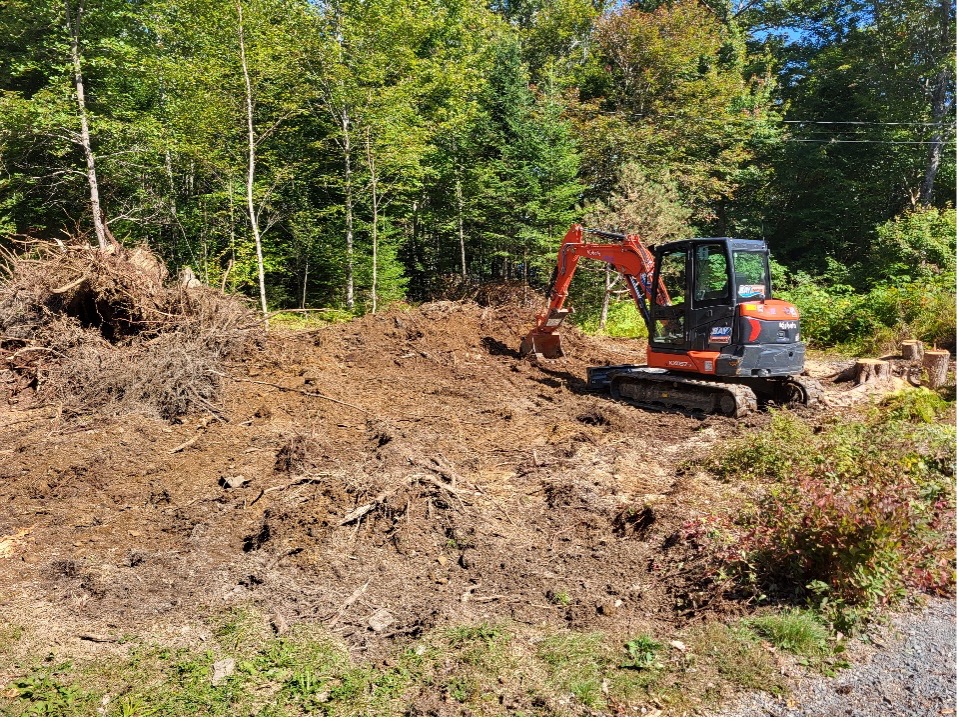
2. Excavation: Removing Unsuitable Material
For a typical engineered garage pad, we excavate approximately 12 inches, although final depth is always driven by the engineer’s design and site conditions.
This step is about more than just digging a hole. We remove all organic material, soft clay, and unsuitable fill that could compress later. Leaving poor soil in place is one of the most common causes of:
- Slab settlement
- Cracking
- Frost heave
- Uneven floors and doors that won’t stay aligned
A solid structure starts with solid ground.
3. Base Material: Class A Gravel, Properly Placed
Once excavation is complete, we install a compacted Class A granular base. This material provides:
- Load distribution for vehicles and equipment
- Drainage beneath the slab
- A stable, non-frost-susceptible layer
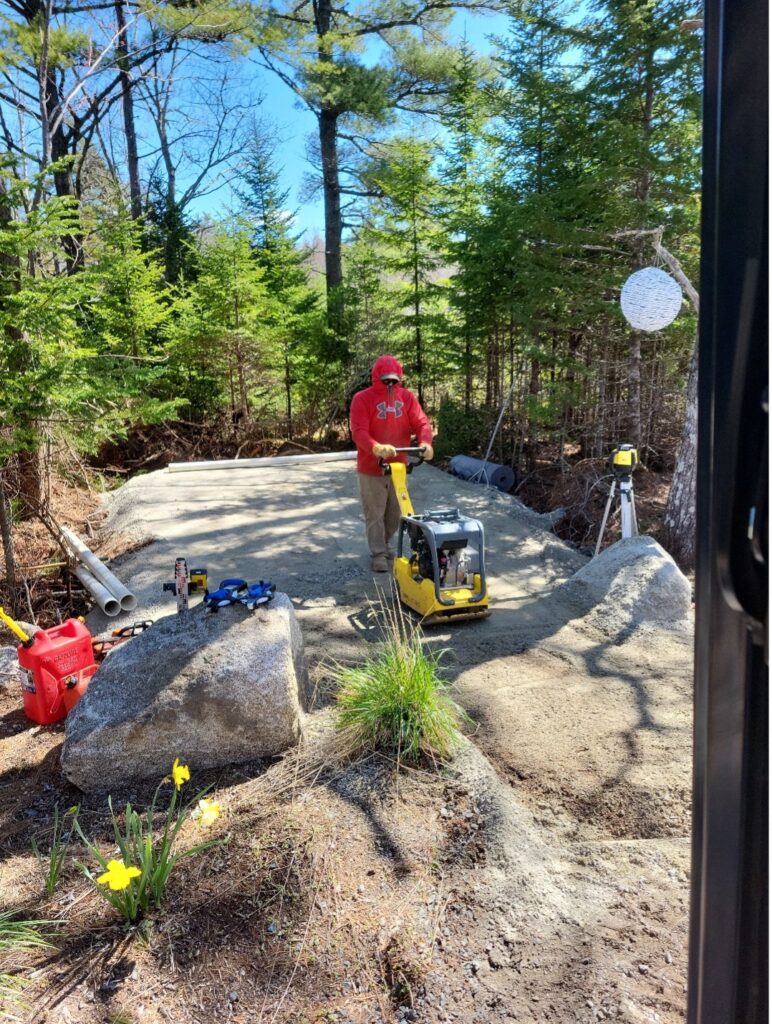
The base is placed in controlled lifts and compacted as required using plate compactors or rollers, depending on pad size and soil conditions. Proper compaction is critical — loose gravel may look fine on the surface but will settle under load and over time.
4. Precision Grading and Forming
We use laser grading equipment to ensure the base and forms are set to the exact elevations required by the engineered design. This ensures:
- Uniform concrete thickness
- Proper slope for drainage
- Square, true foundations for framing
Accuracy at this stage prevents problems later during construction and ensures the finished garage structure sits exactly where it should.
5. Drainage and Frost Protection
Drainage is one of the most important — and most overlooked — aspects of garage pad construction in Nova Scotia.
Depending on site conditions, we may incorporate:
- Geotextile fabric to separate soils and prevent contamination of the base
- Weeping tile to manage groundwater
- Sub-base drainage layers
- Insulation to reduce frost penetration
Should You Insulate Under a Garage Pad?
Insulation can reduce heat loss in a heated garage. Over time the energy savings can become substantial. This is standard practice if in floor heating is selected
- Improves thermal performance if the garage is heated
- Adds long-term stability in frost-susceptible soils
Cons:
- Added material and installation cost
- Must be properly designed and protected to avoid damage
- Not necessary on every site when drainage and base prep are done correctly
We review insulation on a case-by-case basis, following engineering recommendations and site conditions rather than using a one-size-fits-all approach.
6. Concrete Placement and Finishing
While we focus on the excavation and base preparation, concrete placement and finishing are performed by trusted concrete specialists. We coordinate closely to ensure:
- The engineered slab thickness is achieved (often 10 inches, but design-specific)
- Reinforcement and edge details are correct
- The pour schedule aligns with weather and site access
A well-prepared base allows the concrete to perform exactly as it was designed to.
Common Problems We Prevent
We’re often called in to fix or replace pads that were built without proper preparation. The most common issues we see include:
- Settlement from poorly compacted or organic soils
- Cracking caused by uneven support and frost movement
- Water pooling due to poor grading and drainage
- Frost heave in inadequately protected subgrades
- Soft clay or topsoil left beneath the slab
All of these problems are avoidable with proper excavation, base construction, and drainage design.
Why Professional Preparation Matters
It’s easy to underestimate what goes into building a garage pad properly. What looks like “just gravel and concrete” is actually a system that has to perform under:
- Heavy vehicle loads
At FTF Excavation, we bring experience, proper equipment, insurance, and warranty-backed workmanship to every project. Our goal is to build it right the first time, following engineering requirements and best practices so your investment remains solid for decades.
Ready to Get Started?
If you’re planning a new garage or shop and want a foundation you won’t have to worry about, we’d be happy to help.
Request a quote today and let’s start with a proper site evaluation and a garage pad built to last.